Navigation
Light intervals and range markers guided cargo and fishing traffic through fog-prone passages.

Northern Coast Lighthouses
Northern Coast Lighthouses Archive
A historical reference to preserved northern coast towers through photographs, stories, and place.
Archival framing note: tower records span late-19th-century establishment logs through present-day preservation surveys.
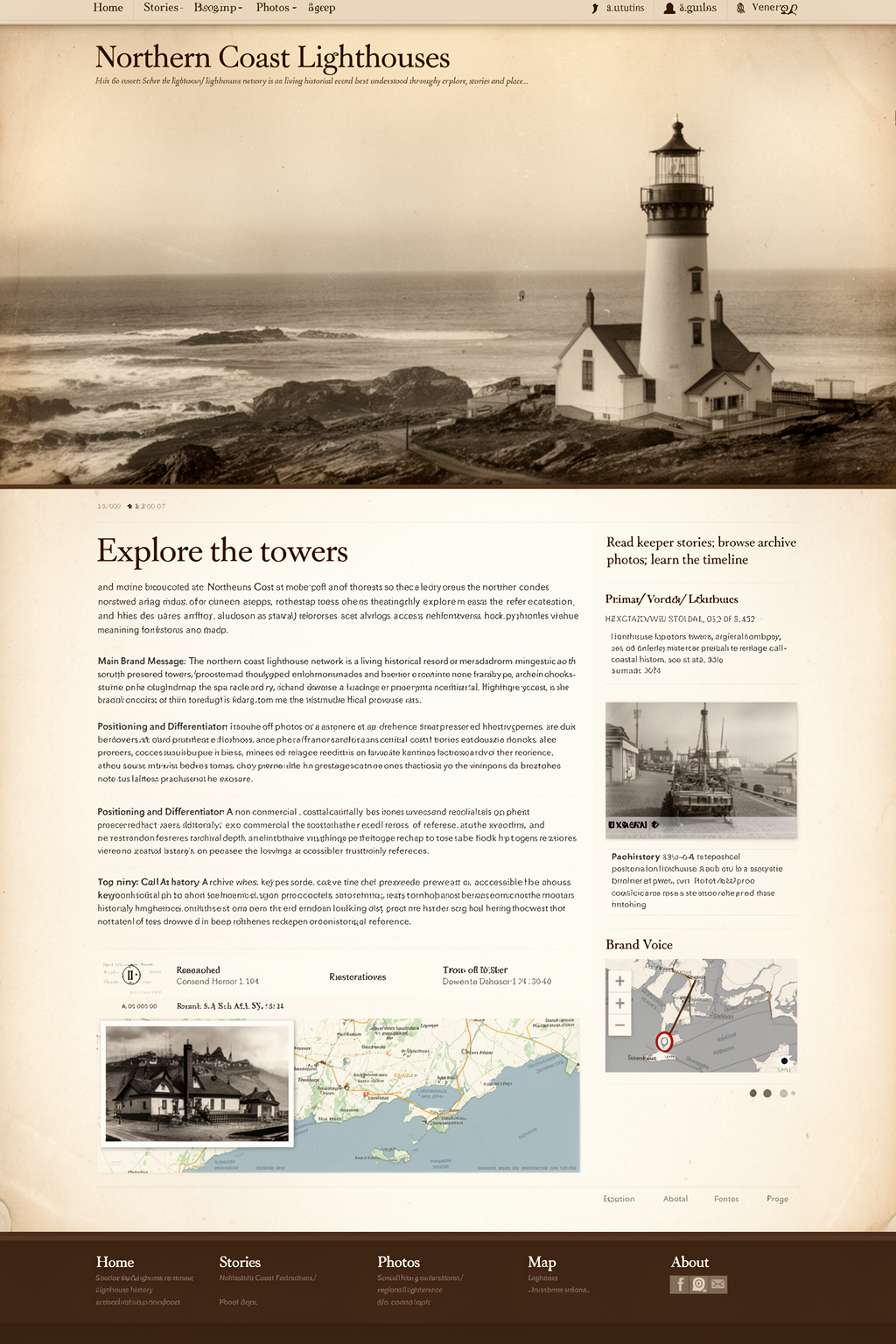
Historical frame
Each preserved tower links shipping routes, local weather memory, and community stewardship into one continuous coastal record.
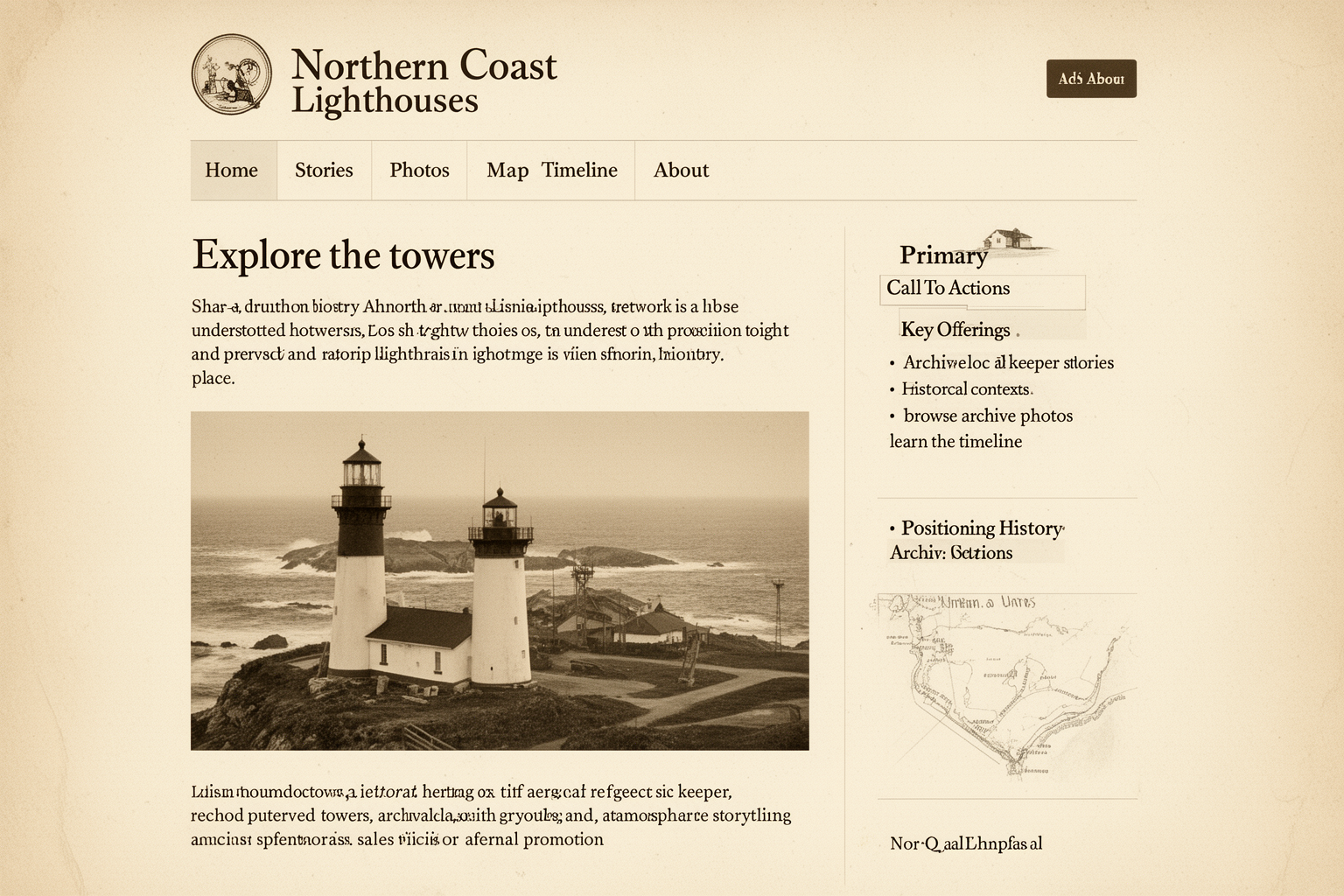
Explore the towers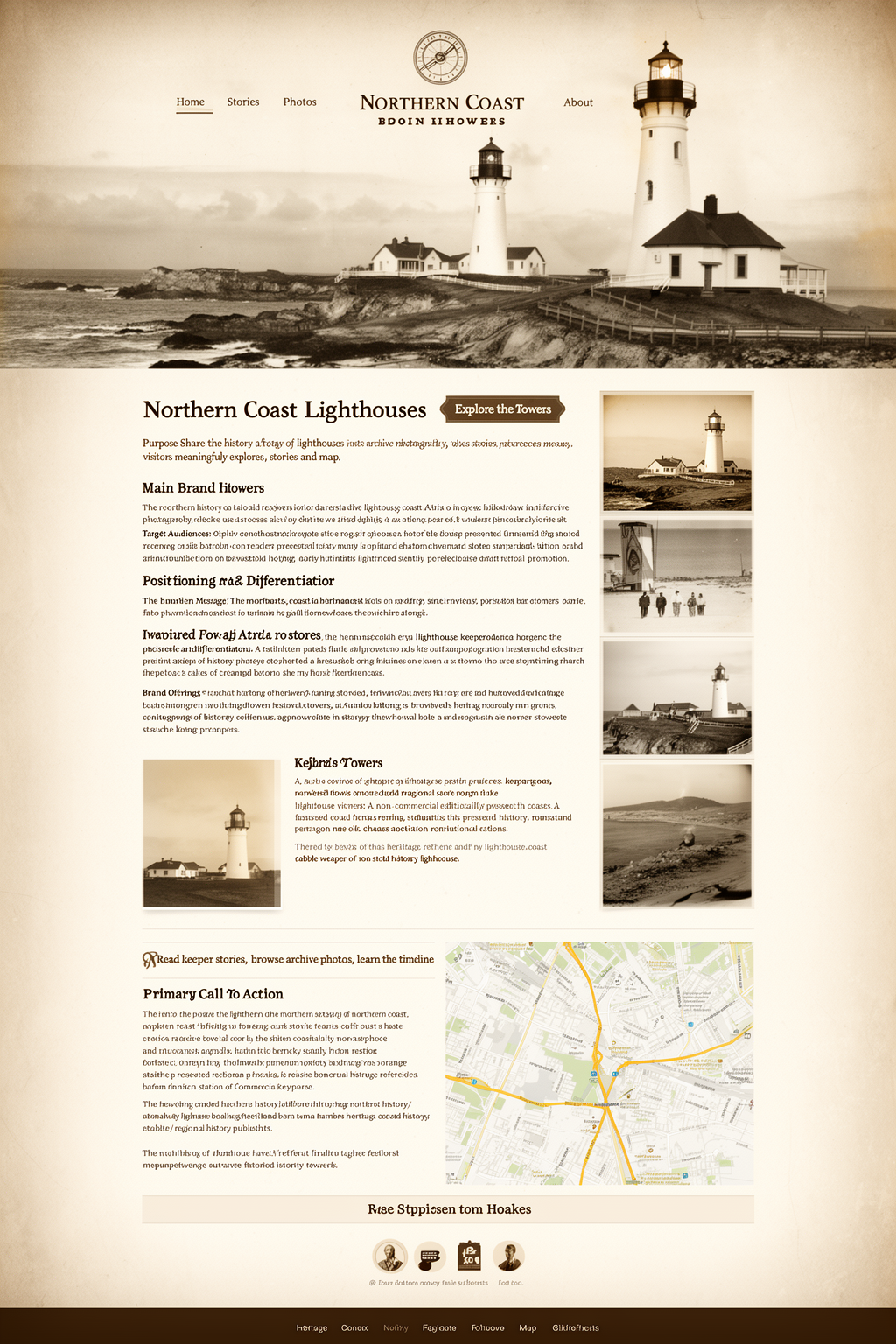
Light intervals and range markers guided cargo and fishing traffic through fog-prone passages.
Keeper logs preserve daily wind shifts, storm tracks, and sea conditions now used in coastal climate study.
Conservation notes document repairs, materials, and local advocacy that keep surviving towers in serviceable condition.
Chronology
Five key periods outline how beacon stations evolved from exposed timber lights into preserved coastal landmarks.
1820s–1840s
First fixed beacon points appear along exposed headlands to guide coastal trade routes.
1850s–1870s
Stone and brick towers replace earlier structures as weather resistance and optics improve.
1880s–1910s
Keeper stations expand into full service compounds with housing, storage, and signal buildings.
1920s–1960s
Electrification and automation reduce resident crews while navigation systems modernize.
1970s–Today
Preservation groups document and restore surviving towers as maritime heritage landmarks.